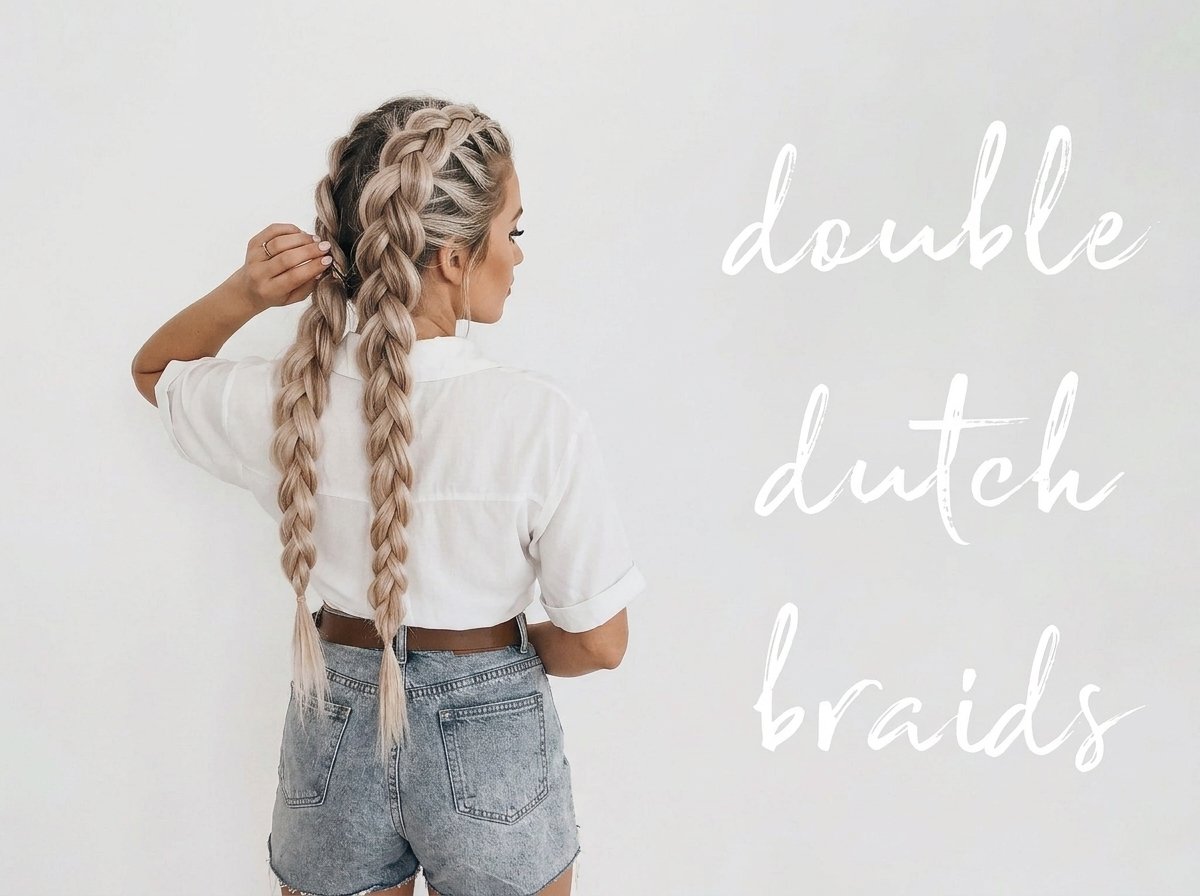
Two Dutch braids are the hairstyle equivalent of a great pair of trainers: sporty, dependable, and somehow always in style. They sit slightly raised along the scalp, show off a clean centre part, and give your hair that sculpted, put-together finish without demanding a full salon appointment. Whether you call them double Dutch braids, boxer braids, or simply “the braids that keep everything in place,” they are endlessly wearable.
The technique is wonderfully simple once you know the little twist: instead of crossing the outer strands over the middle like a French braid, you bring them underneath. That one move creates a raised, 3D braid that pops beautifully from every angle. From there, the styling possibilities are generous—tight and glossy, soft and voluminous, finished in buns, ponytails, or left to unravel into waves. Here’s where the fun starts: we are answering the most-searched questions first, then exploring six double-Dutch looks for every mood.
What is the difference between Dutch and French braids?
A Dutch braid is essentially a reverse French braid: the outer strands cross under the middle section rather than over it. This makes the braid sit on top of the hair with a raised, rope-like effect, while a French braid lies flatter and blends more into the head.
How do you do two Dutch braids?
Part the hair straight down the centre from the front hairline to the nape, clip one side away, and divide the other side into three equal sections. Cross each outer strand under the middle one, gradually adding fresh hair from that side before every cross, then repeat the same process on the other half. Keeping the sections similar in size and tension will make both braids look even.
How long do two Dutch braids last?
Double Dutch braids can usually stay neat for a day or two, especially if they were braided with light product and secured well. Sleep with a satin scarf, bonnet, or pillowcase, and refresh the roots with a little water or leave-in spray if frizz starts creeping in.
Are two Dutch braids good for curly hair?
Yes, they are excellent for curls because they keep the hair organised while allowing you to show off texture at the ends. Work with damp or freshly moisturised hair, use a curl-friendly leave-in, and avoid braiding so tightly that your edges or scalp feel uncomfortable.
1: Classic Double Dutch Braids
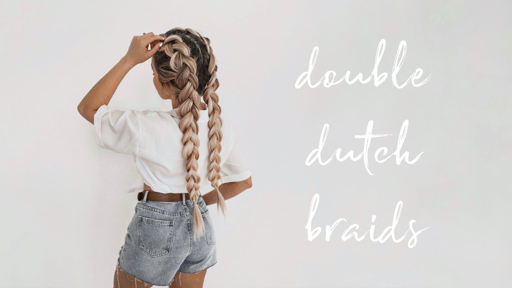
Image source: L’Oréal Paris — Hair Braiding Tutorials.
This is the classic version: two symmetrical Dutch braids beginning at the front hairline, running close to the scalp, and finishing in tidy pigtails. Create it by making a clean centre part, then Dutch braid each side with even sections and secure the ends with snag-free elastics. It is giving polished without trying too hard, which makes it perfect for workouts, travel, school, or a busy day when you want zero hair drama. Apply a small amount of smoothing serum to damp hair before braiding, then wrap the ends in satin scrunchies overnight to preserve the shape.
2: Chunky Pancaked Double Dutch Braids
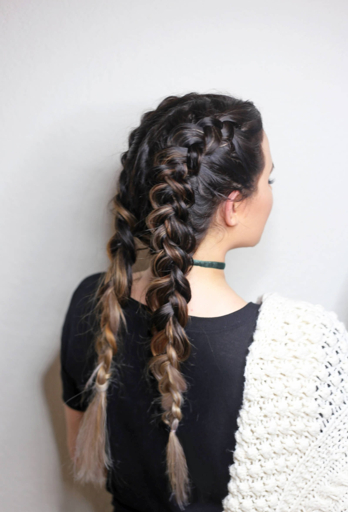
Image source: Mash Elle — Double Dutch Braids for Beginners.
Next up, chunky double Dutch braids are gently stretched along the outer edges to create fuller, more textured plaits with serious volume. Braid both sides first, then carefully pull each outer loop a little wider, working from the crown downward and keeping the braid’s centre line intact. Okay, this one is a moment for festivals, weekends away, and anyone who wants that effortless, slightly undone braid energy. Use a flexible-hold spray after pancaking so the fullness stays soft rather than collapsing by lunchtime.
3: Sleek Double Dutch Braids Into a Low Ponytail
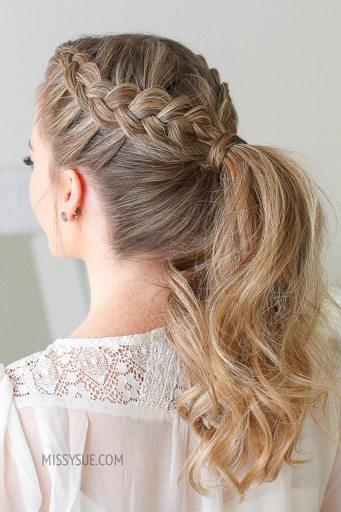
Image source: Missy Sue — Double Dutch Braid Ponytail.
For a softer look, two neat Dutch braids travel from the crown to the nape and meet in one low ponytail, leaving the lengths smooth and free-flowing. Ask for—or create—two braids that stop just below the crown, then gather them with the rest of the hair into a low ponytail and secure with a strong elastic. This style has such a pretty finish for office days, dinners out, or any occasion where you want something secure but still feminine. Wrap a thin strand of hair around the elastic and pin it underneath for a sleek, intentional finish.
4: Double Dutch Braids Into Space Buns

Image source: Cute Girls Hairstyles — Double Dutch Buns.
If you love extra drama, double Dutch braids finished into two buns bring a playful, high-energy twist to the classic style. Dutch braid each side until you reach the crown or nape, then twist the remaining hair into matching buns and secure them with pins or elastics. The details really make this one—it feels cheerful, youthful, and ready for a concert, holiday, gym session, or a day when a basic ponytail simply will not cut it. Keep the buns balanced by dividing the hair evenly and using several small pins rather than pulling everything into one tight base.
5: Curly Double Dutch Braids With Loose Ends
Image source: The Right Hairstyles — Types of Braids.
Then there’s this beauty: two raised Dutch braids with defined curls left loose at the ends, creating a lovely mix of structure and movement. Braid each side with a light curl cream or leave-in, stop braiding once you reach the nape, and let the remaining curls spring out naturally. This look is ideal for natural texture, humid days, or anyone who wants a protective-feeling style that still feels soft and romantic. Refresh the loose curls with a water-and-leave-in spritz, then scrunch gently rather than brushing through them.
6: Glossy Double Dutch Braids With Clean Part
Image source: ghd — How to Do a Double Dutch Braid.
Finally, glossy double Dutch braids feature a razor-sharp centre part, smooth roots, and compact braids that look sculpted rather than casual. Use a fine-tooth comb to create the part, apply a lightweight gel or cream along the roots, and braid with consistent tension for that clean, high-shine finish. Consider this your sign to try it when you want maximum hold with minimum fuss—think travel days, hot weather, dance classes, or a polished athleisure look. Avoid overloading the lengths with product, and use a soft edge brush only along the hairline if you want a few sculpted baby hairs.
Your Double-Dutch Moment
Two Dutch braids are proof that a simple centre part can deliver serious style. Choose sleek and sculpted, fluffy and full, curly and carefree, or braided into buns—the best version is the one that fits your day, your texture, and your personality. Keep the tension comfortable, protect your hair overnight, and let those raised braids do their thing.