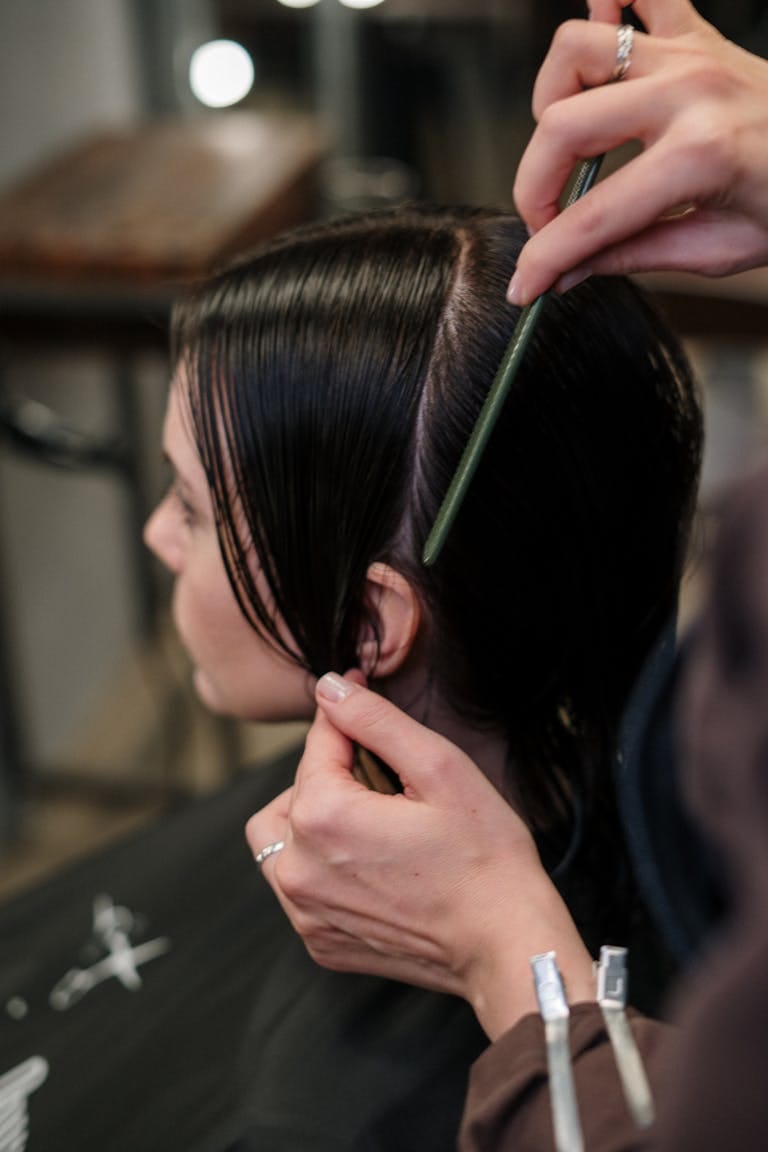
Okay guys, I need to tell you about the most chaotic thing that happened to my brother last month. He walks into his barber, asks for a “taper,” and walks out with something that looked like… I genuinely don’t know how to describe it. Somewhere between a mid fade and a low fade and not really either of them. He didn’t say LOW taper or MID taper. He just said “taper.” His barber made a judgment call. And the judgment call was wrong for his face shape.
He’s not alone in this. I have watched SO many guys sit in the barber chair, point vaguely at a picture on Instagram, and say “yeah, like that but different” and then be confused when the result doesn’t look quite right. The problem almost always comes down to taper height — specifically, whether the fade starts low, near your natural hairline, or mid, up around the temple area.
This is not a complicated thing to understand once someone explains it properly. And once you know which one works for YOUR face shape, you will never walk out of the barbershop confused again. So let’s actually talk about it, with real photos, real breakdowns, and no confusing barber jargon.
The Questions I Know You’re Already Googling
What is the actual difference between a low taper and a mid taper?
The difference is where the fade starts — meaning where the hair begins to get shorter and blend down toward nothing. A low taper starts right above your natural hairline, so almost all of your hair length stays intact until it reaches the very bottom of your head. A mid taper starts higher up, around the temple area and above the ears, creating a more visible gradient from the longer top to the shorter sides. The low taper is subtler and more conservative. The mid taper has more contrast and visual impact.
Which one looks more professional?
Both look completely professional — the low taper just reads as slightly cleaner and more traditional. It’s the kind of taper you’d see on a lawyer or a corporate exec who wants to look groomed but not like he spent an hour at the barbershop. The mid taper has a little more edge to it, a bit more style, but it’s still 100% office-appropriate. What actually matters more for looking professional is the neatness of the cut and how recently you got it done, not the specific fade height.
Can any face shape pull off a mid taper?
Yes, but there’s nuance. The mid taper adds visual width to the sides of your head because the fade transition happens higher up — you have more visible hair on the sides before it disappears. For guys with longer or narrower face shapes, this is GREAT because it balances things out. For guys with wider or rounder faces, a low taper is usually more flattering because it minimizes width around the sides. More on this below.
How long does a taper last before it needs a touch-up?
A low taper looks fresh for about three to four weeks before it starts to look obviously grown out. A mid taper actually tends to show regrowth a little faster — closer to two to three weeks — because the transition zone is more visible on the sides. If you’re someone who goes to the barber every six weeks, a low taper is going to serve you way better in that last month than a mid taper will.
What’s the difference between a taper and a fade?
A taper gradually reduces the length from longer to shorter as you move down the head, but it doesn’t necessarily go all the way to the skin. A fade goes to the skin — you get actual skin exposure at the bottom of the fade. A taper fade does both: it tapers AND fades down to skin. When most people say “taper” at the barbershop today, they usually mean a taper fade. Just something to be aware of so you’re speaking the same language as your barber.
First, Let’s Actually Look at the Difference
Before we get into face shapes, you need to be able to SEE the difference between these two cuts so you can point to a photo at the barbershop and say “this one, at this height.” No more vague pointing. Let’s fix that.
What a Low Taper Actually Looks Like
 Photo via therighthairstyles.com
This is your textbook low taper. See how almost all the hair length is preserved until you get right down to the bottom of the sides and the back? There’s barely any fade zone visible — just a very clean, gradual transition that happens right at the hairline. The overall silhouette of this guy’s head is clean and rounded, without any harsh lines or obvious contrast points.
This is the “I got a fresh haircut but I’m not trying to announce it to the entire room” taper. Super clean, super wearable, easy to grow out gracefully. For guys who don’t want to visit the barbershop every two weeks, this is the one.
What a Mid Taper Actually Looks Like
 Photo via therighthairstyles.com
Now look at this versus the first photo. The fade starts higher — you can see it beginning around the temple area, noticeably above the ears, creating that visible transition zone on the sides of the head. There’s more contrast between the longer top and the shorter sides. More visual interest. More presence.
This is the “yeah, I definitely just went to the barber and I look incredible” taper. The gradient is intentional and visible. It makes the top of the head look more prominent, which is great for certain face shapes and something to be thoughtful about for others.
The Low Taper — Who It’s For and How to Wear It
The low taper is the workhorse of men’s haircuts. It’s versatile, easy, flattering on almost everyone, and requires zero explanation at the barbershop. Here’s how it looks across different styles and hair types.
Low Taper for Curly Hair — The Natural Way
 Photo via therighthairstyles.com
This is what the low taper was basically invented for. Natural curly hair at the top, fading down gradually to a clean baseline — the curls on top stay completely intact and looking amazing, while the sides give the whole look a shape and a polish it wouldn’t have otherwise.
The key thing about a low taper on curly hair is that it doesn’t fight your texture, it works with it. The curl pattern naturally creates volume and definition at the top, and the taper just provides the framework. If you have naturally curly or coily hair and you’ve never tried this, you genuinely might change your whole relationship with getting haircuts.
Best for: Oval, oblong, and heart-shaped faces. The low sides and natural volume on top elongates wider faces just enough without overdoing it.
Low Taper with Side Part — The Classic Professional
 Photo via therighthairstyles.com / @cutsbyerick
A side part with a low taper is basically the definition of “classic men’s grooming done right.” Clean, structured, timeless. The side part adds an element of asymmetry that makes the face look more defined, and the low taper keeps the overall shape conservative and polished without being boring.
This is the haircut that works at a job interview, a first date, a wedding, a Tuesday at the office, and literally every other occasion you can think of. If someone asks for the most universally appropriate men’s haircut I could recommend, this is it.
Best for: Square and oval face shapes. The side part adds horizontal structure that works beautifully with strong jawlines, and the low sides keep everything proportionate.
Low Taper with Long Top and Layers — For the Texture Guys
 Photo via therighthairstyles.com / @don_rommel
This is for the guy who doesn’t want a SHORT haircut but still wants the clean structure of a taper. Longer hair on top — kept layered to show off the natural wave or curl pattern — fading down to a clean low taper on the sides. The contrast here is subtle because the low taper keeps the sides from disappearing too dramatically.
If you’ve been growing your hair out and want to keep the length but look more intentional and put-together, this is the exact move. The taper is doing just enough work to make the whole thing look like a deliberate style choice instead of just “hair that hasn’t been cut in a while.”
Best for: Oblong and rectangular face shapes. More length on top creates vertical emphasis, while keeping the sides relatively full prevents the face from looking too narrow.
Low Taper Caesar Cut — Simple and Sharp
 Photo via therighthairstyles.com
The Caesar cut — short, horizontal fringe across the front, uniform length on top — with a low taper on the sides is one of the cleanest possible haircuts a man can get. There’s zero fuss involved. You’re not styling this, you’re not fighting it, you’re not using three products. You just… have a really sharp haircut.
This is the haircut for the guy who wants to look great without putting any effort into it afterward. And honestly? For a lot of guys that’s exactly the right goal. Not everyone wants to spend fifteen minutes on their hair in the morning, and you shouldn’t have to.
Best for: Round and square face shapes. The horizontal fringe breaks up the length of the face in a flattering way, and the clean sides prevent the face from looking too wide.
Low Taper for Thick Curly Hair — Volume Done Right
 Photo via therighthairstyles.com / @joshlamonaca
Thick curly hair can feel like too much sometimes — there’s a LOT of it and it doesn’t always cooperate. A low taper solves that by keeping the sides and back clean while letting the curls on top do their thing freely. The shape becomes an inverted trapezoid, which is incredibly flattering and shows off the hair’s natural texture in the best possible way.
This is also a very low-maintenance situation in terms of daily styling — finger-comb the curls when they’re damp, let them dry naturally, and that’s genuinely it. The taper keeps everything looking intentional even on the days you don’t do anything to it.
Best for: Oval and heart-shaped faces. The volume at the top adds height without adding width at the sides, which creates a very balanced overall shape.
The Mid Taper — Who It’s For and How to Wear It
The mid taper has more personality than the low taper. It’s got visible contrast, more visual impact, and a slightly bolder energy. Here’s who it’s made for and how it looks in practice.
Mid Taper with Drop Skin Fade — The Modern Barbershop Classic
 Photo via therighthairstyles.com
This right here is the mid taper at its most polished. Clean-shaven sides that drop behind the ears with a sharp line-up at the front, paired with a well-trimmed beard. The mid fade starting at the temple creates a smooth gradient that transitions beautifully into the beard, making the whole thing look completely unified.
When the fade connects seamlessly into facial hair like this, it’s one of the cleanest-looking things a man can do with his hair. The barber work has to be precise — this is not a “good enough” cut, it’s a “has to be perfect” cut — but when it’s done right, it is absolutely worth every penny.
Best for: Oblong, oval, and rectangular face shapes. The mid fade adds visual width to the sides, which balances out a longer face beautifully. If you have a longer face and have been doing a high fade, switch to mid. You will immediately see the difference.
Mid Taper for Curly Hair — Maximum Impact
 Photo via therighthairstyles.com / @ali_bar.ber
Curly hair and a mid taper is genuinely one of the most striking combinations in men’s hair. The curls on top create massive volume and visual interest, and the mid fade starting at the temple gives the whole thing a defined shape that stops it from looking overgrown or unintentional.
The contrast here is the point. The fade goes almost to skin at the bottom while the curls on top are full and free — that tension between the two is what makes this look so head-turning. It takes a skilled barber to blend it well, so bring a reference photo.
Best for: Oval and heart-shaped faces primarily. If you have a round face, you CAN do this but ask your barber to keep the mid fade from adding too much width at the sides — a tighter blend will help. For oblong faces, this is actually perfect as the additional width from the curls + mid taper creates great balance.
Mid Taper Slicked Back — Old Money Meets Modern Barber
 Photo via therighthairstyles.com
This is the haircut that’s absolutely everywhere right now, and I completely understand why. Slicked-back hair on top — think old money aesthetic, sophisticated, intentional — with a mid fade that creates the structure and contrast the look needs to not feel too stuffy. The mid fade is important here because it adds that modern edge that keeps the slicked-back from looking like it belongs in a 1940s photo.
If you have been wanting to try the old money hair trend and aren’t sure how to make it feel current, this is your answer: slick it back, ask for a mid taper fade, and let the two things balance each other out. Old school energy, fresh execution.
Best for: Oval and square face shapes. The height and volume on top from the slicked-back style adds length to the face, which works beautifully with a wider or squarer jaw. The mid taper provides the side structure that keeps everything from looking too top-heavy.
Mid Taper Textured Top — The Everyday Cool Guy
 Photo via therighthairstyles.com
Short, choppy, textured hair on top with a mid fade that goes pretty close to the skin around the sides and temples. This is the go-to barbershop request for guys who want to look cool and put-together without having a “hairstyle” that requires effort to maintain. You just push it around with your fingers in the morning and go.
The texturing on top is key — without it, the close fade on the sides would make the whole thing look too severe. The messiness of the top and the sharpness of the sides create a contrast that’s intentionally relaxed-but-groomed, which is the sweet spot for 2026.
Best for: Heart-shaped and oval faces. The wider forehead of a heart-shaped face is balanced by the volume at the top, and the mid fade keeps the sides from adding too much width at the jaw.
Mid Taper Faux Hawk — When You Want to Make a Statement
 Photo via therighthairstyles.com / @carpesbarber
A faux hawk needs a mid taper to work properly — and this is exactly why. The mid fade creates the dramatic contrast between the shorter sides and the hair standing up in the center, giving the faux hawk its signature shape and impact. A low taper here would make it look too soft and undefined. A high fade would make it look too extreme. The mid is the exact right choice.
This is genuinely bold but it’s not aggressive — it’s the version of the faux hawk that you can wear to work on a Friday or out on a Saturday night without it feeling like a costume. If you have coarse or thick hair that holds its shape naturally, this cut is going to look incredible on you without much product at all.
Best for: Oblong and oval face shapes. The height in the center adds vertical emphasis that elongates the face, which works perfectly for faces that are already naturally proportioned. For rounder faces, a faux hawk can work but keep the sides very tight to add height without width.
Mid Taper Tousled Crop — The Modern Classic
 Photo via therighthairstyles.com / @xbigwesx
Thick, tousled hair on top — not styled into anything specific, just sort of pushed around with texture product — sitting on top of a mid taper fade with a sharp beard line. This is the modern equivalent of the classic crop and it is genuinely the most-requested style at barbershops right now for a reason.
The great thing about this look is that it actually requires you to NOT try too hard with the styling. The messier the top, the better it works against the clean lines of the fade. Volumizing powder, matte clay, or even just going to bed with it slightly damp — all of these produce exactly the right result.
Best for: Square and oval face shapes. The tousled top adds height without too much width, which works beautifully for square faces that want to elongate slightly. For round faces, add more height and keep it off the sides.
Mid Taper Curtain Bangs — The Trendy Pick for 2026
 Photo via therighthairstyles.com / @brodiethebarber_
Yes, curtain bangs on men are happening, and yes, they look great with a mid taper. The curtain bang parts in the center and sweeps to both sides, framing the face in a way that’s unexpectedly soft and flattering. Paired with the mid fade and a two-tone color effect, this is one of the most distinctive-looking men’s haircuts right now.
If you have been wanting to try something a little different but aren’t ready to fully commit to a dramatic style change, this is the version I’d recommend. The curtain fringe is soft enough that it doesn’t feel like a costume, and the mid fade keeps the overall look sharp and current.
Best for: Square and oval faces. The center part of the curtain bang creates a vertical line down the face that adds length to wider or squarer faces, and the mid fade adds structure without making the sides too heavy.
Mid Taper for Wavy Hair — The Effortless Option
 Photo via therighthairstyles.com / @modernfreshfades
Thick wavy hair is possibly the single best hair type to pair with a mid taper, and this photo is exactly why. The waves on top create natural volume and movement without any product required, and the mid fade gives the whole thing a shape that’s both relaxed and deliberately styled at the same time.
Style this with curl cream on wet hair, diffuse dry it or just let it air dry, and you’re genuinely done. The waves will set themselves and the mid taper will keep everything looking intentional. This is one of those haircuts that gets BETTER over time as the top grows out slightly, which is a rare and beautiful thing.
Best for: Oval and oblong face shapes. The natural width that wavy hair creates at the sides fills in narrower face shapes beautifully, and the mid taper provides enough structure to keep everything balanced.
Mid Taper Afro Fade — Bold, Clean, and Incredible
 Photo via therighthairstyles.com / @jocutit
The afro with a mid taper is something special. The tight curl pattern holds its shape at the top so well that you can keep real volume and weight up there while still having that clean, sharp blowout taper on the sides. The line-up at the front adds precision that grounds the whole look.
The mid height is particularly well-suited to afro textures because it allows the natural growth pattern to flow into the fade in a way that looks completely seamless. A low taper on an afro can sometimes look slightly less defined — the mid taper creates that crisp contrast that makes the overall shape so striking.
Best for: Oval and round faces. For round faces especially, the height from the afro top adds vertical emphasis that the face shape really benefits from, and the mid taper keeps the sides from adding too much horizontal width.
The Cheat Sheet: Which Taper for Which Face Shape
I know this is a lot of information, so here is the fast version you can screenshot and take to your barber.
Round face → Low taper. Avoid adding width at the sides. Pair with height on top to elongate the face. If you’re doing a mid taper, make sure the top has significant height to compensate.
Square face → Either works, honestly. Low taper for something classic and clean. Mid taper for something with more edge. The strong jawline of a square face handles both fade heights beautifully.
Oval face → Congratulations, you can do whatever you want. Oval is the most versatile face shape and it works with low, mid, and high tapers across every style. Use this freedom wisely.
Oblong/rectangular face → Mid taper is your best friend. The visual width it adds at the sides balances out a longer face shape. Avoid very high tapers that emphasize height over width.
Heart-shaped face → Low taper. Heart shapes have a wider forehead and narrower chin, so keeping the sides fuller with a low taper creates better balance. A mid taper can work if the top isn’t adding too much volume at the crown.
Diamond face → Low taper. Diamond faces have wider cheekbones and narrower forehead and chin, so a low taper keeps the sides clean without emphasizing the widest point.
The Bottom Line
The difference between walking out of the barbershop looking like yourself but sharper versus walking out confused about what you asked for is this: knowing what height to specify. Low taper = subtle, starts at the hairline, grows out gracefully, works for almost every face shape. Mid taper = more contrast, starts at the temple, bolder visual impact, particularly great for longer or narrower face shapes.
Go back and look at the photos in this article. Find the ones that look closest to what you want. Save them to your phone. When you sit down in the barber chair, show the photo AND say the words “low taper” or “mid taper.” That combination — photo plus words — removes all the ambiguity. Your barber will thank you. Your face will thank you. And you will never have another haircut situation like my brother did.
Book the appointment. Save the photo. Walk out looking exactly how you intended.
Found this helpful? Save your favorite styles and bring the photos to your barber. Which taper height are you going with?